Trans women are not biological females. There. Said it.
As a libertarian I'm all in favour of personal freedom - whether this consists of blokes wearing skirts and high heels and living as girls, or girls wearing suits, sporting a Number One cut and living as blokes. It's fine. It really is. Do what you want; you can even take pills and have surgery to assume the look, so long as you have the means to sustain it. No one cares. But please don't ask me to perform feats of Orwellian mendacity in pretending that you are actually a member of the biological sex in which you have chosen to live.
What is really chilling about yesterday's landmark ruling for common sense in the Miller case is that the real issue has yet to be decided - the lawfulness of the 'College of Policing' guidance that has seen 120,000 wholly innocent citizens recorded on their semi-private computer system as guilty of 'non-crime hate incidents'. How dare they? Words and actions in this country are either criminal or they are lawful. If they are lawful, these nasty secret little power cabals such as the 'College of Policing' may be entitled to record them - but we are entitled to full knowledge of what may have been recorded against us, for making statements such as that in my first paragraph. These records must be fully open to personal inspection under the UK's own version of the GDPR, and the 'College of Policing' fully liable in civil law for any loss or damage caused.
It absolutely infuriates me that these secretive private organisations funded from our tax yet exempt from all accountability can take such liberties with our liberties. We must drag their dark little 'College of Policing' into the sunlight, subject it to full public accountability and put its self-serving capos before the appropriate parliamentary committees.

Saturday, 15 February 2020


Friday, 14 February 2020
Budget briefing: Why Javid had to go
I think there are sound reasons why Sajid Javid had to go, not least of which was the damage he could potentially cause to the UK economy by allying himself with the Remainer doomsters and gloomsters at the Treasury. Allow me to explain -
You can see that ever since the Thatcher government in 1979 (which was elected, remember, because Labour had so screwed the economy) Britain has had a sort of tax-take comfort zone which is somewhere between 35% and 40% of GDP. In fact what I've labelled 'taxes' includes both interest payments and interest receipts and dividends - so the official term is 'public sector current receipts'. Total spending is generally higher than current income - somewhere around the 40% mark.
Now to put some of the arguments within cabinet into perspective, 1% of GDP is about £22bn a year. So before rebates and tax-collection adjustments,this is what we will save by leaving the EU*. If we wanted to, say, increase total government expenditure from 39.3% of GDP to 42.5% of GDP (a fairly modest increase) this would give us an additional £70bn a year (plus £10bn EU leaving bonus) for investment. So even £100bn over 20 years - £5bn a year - for HS2 isn't such a big thing.
Of course this additional borrowing means we have to pay interest - but rates at the moment are close to zero. And investment borrowing - to up the nation's game, increase capacity, productivity and so on - also produces additional tax income and lower current expenditure on welfare. This is why it's particularly vital to invest in those parts of the UK that have been so long deprived of it, ever since the Callaghan Labour government started closing the pits and running down British industry in the 1970s.
Number 10 knows this. The Treasury doesn't. And Sajid Javid went native. He had to go.
* Yes it is. This is from the EU's own website from 2015 - I just had it on file - when the 1% figure was £20bn. After rebates and tax-offsets of course it comes down to £12/£13bn.

 | |
| UK public sector spend - Source: OBR |
Now to put some of the arguments within cabinet into perspective, 1% of GDP is about £22bn a year. So before rebates and tax-collection adjustments,this is what we will save by leaving the EU*. If we wanted to, say, increase total government expenditure from 39.3% of GDP to 42.5% of GDP (a fairly modest increase) this would give us an additional £70bn a year (plus £10bn EU leaving bonus) for investment. So even £100bn over 20 years - £5bn a year - for HS2 isn't such a big thing.
Of course this additional borrowing means we have to pay interest - but rates at the moment are close to zero. And investment borrowing - to up the nation's game, increase capacity, productivity and so on - also produces additional tax income and lower current expenditure on welfare. This is why it's particularly vital to invest in those parts of the UK that have been so long deprived of it, ever since the Callaghan Labour government started closing the pits and running down British industry in the 1970s.
Number 10 knows this. The Treasury doesn't. And Sajid Javid went native. He had to go.
* Yes it is. This is from the EU's own website from 2015 - I just had it on file - when the 1% figure was £20bn. After rebates and tax-offsets of course it comes down to £12/£13bn.

Thursday, 13 February 2020
Preventing online harms to politicians
Government proposals to prevent online harms to politicians and those in public life
I may yesterday have given the impression that I in some way objected to our wise Leader's introduction of internet censorship for the UK. Nothing could be further from the truth. I recognise that the wise and reasonable proposals made by the fragrant Lady Morgan and the saintly Ms Patel will propel the UK into a place unknown by other democratic nations.
In particular, I applaud the wisdom of including perfectly legal and lawful content in the material to be censored. The White Paper is intended to protect vulnerable groups such as children and those active in public life, in circumstances in particular in which politicians and civil servants may be offended or disturbed by comments on their actions made by citizens. Politicians must be free to do as they wish without negative and sometimes hurtful comment from citizens. So even though such comments are quite legal, they must be banned from the internet for the public good.
Quite rightly neither the government, the courts, the regulator Ofcom or companies that provide platforms in return for advertising revenue wish to be bothered with vexatious complaints about censorship and injustice from individual citizens. The government will therefore make it practically impossible to appeal the arbitrary banning of content and voices, in the best interests of the State.
We also welcome moves to end internet anonymity in the UK. It is clearly simply wrong that so many individuals making comments on news sites, Twitter, blogs and other internet forums do so under assumed identities. During the recent General Election campaign, for instance, the government estimate that some 64% of anonymous political statements were posted by those from the civil and public services, who only form 39% of the workforce. As those employees are contractually forbidden from making public political statements, ending internet anonymity will either silence them or allow them to be easily dismissed from their posts. National productivity will also be increased as they will get on with making beds, policing bus lanes, changing colostomy bags and so on rather than fiddling with their phones.
I also applaud measures to be taken against disinformation and the saying of untrue things on the internet, and clearly the BBC must have a major role as the arbiter of what is truthful and can be stated and written by citizens in this regard.
Personally, I think the proposed legislation doesn't go far enough. There is no mention for example of regulating or banning cartoons that portray politicians in negative and sometimes hurtful ways. These must also be included in the scope of legislation or Twitter will become a mass of poorly-drawn caricatures posted by named persons in such a way that will evade censorship.
I confirm I am willing of my own free will to submit this posting to the Google Blogger UK content checking authority, appointed by Ofcom in accordance with the Online Harms Act 2020, for verification and permission to publish
Wednesday, 12 February 2020
Dear God, the frightful buggers are at it again
This ill-thought out, incomplete and premature response to the April 2019 consultation was rushed out today by DCMS mandarins ahead of Nicky Morgan's replacement tomorrow. The timing is desperate.
I'll post tomorrow again about this, but as a catch-up reminder, here was where we were in April of last year -
She is supported by her sinister Grand Vizier Sajid Javid and by Labour's Noncefinder General, Tom Watson - whose credulity in giving his support to criminal fantasists who flung accusations of paedo assault against the wholly innocent matches only his deep Socialist support of any measures that restrict free speech and repress democratic freedom.
The way they're going to do it is this. First they establish their ability to impose swingeing penalties on the online service providers - Facebook, Twitter, Google (the host of this blog). Then they task these firms with implementing government censorship requirements or risk even greater penalties. For blogs such as this, the duty will not be simply to remove censored content when notified but to act proactively to identify those blogs likely to offend the government and close them down in advance. With MPs whining like babies about people being rude about them, you can be sure they'll include censorship of political criticism in a government-imposed list of censored blog content including (Chapter 7)
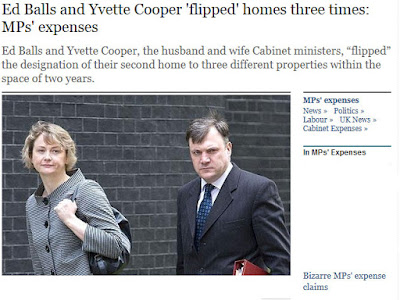
Neither will blogs be able to remind readers for example of Yvette Cooper's home flipping or her mendacious pledge to house migrants in one of her homes -
 And finally, the Ministry of Truth will come to life as the government decides what information and informed comment can be published on this blog
As even the 'Daily Remain' comments
OK, I suggest any readers with any interest in freedom investigate using Tor and Signal.If this repressive authoritarian shite becomes law, we're going underground.
I'll post tomorrow again about this, but as a catch-up reminder, here was where we were in April of last year -
Tuesday 9th April 2019
Censorship and Repression - May's Ceauscescu moves
A leader desperately clinging onto power and fearful of the whispers of the people will inevitably enact repressive measures to restrict free speech - and it's therefore no surprise that the doomed May has gone down the Ceauscescu path with proposals contained in the Online Harms White Paper for widespread government censorship of the internet.She is supported by her sinister Grand Vizier Sajid Javid and by Labour's Noncefinder General, Tom Watson - whose credulity in giving his support to criminal fantasists who flung accusations of paedo assault against the wholly innocent matches only his deep Socialist support of any measures that restrict free speech and repress democratic freedom.
The way they're going to do it is this. First they establish their ability to impose swingeing penalties on the online service providers - Facebook, Twitter, Google (the host of this blog). Then they task these firms with implementing government censorship requirements or risk even greater penalties. For blogs such as this, the duty will not be simply to remove censored content when notified but to act proactively to identify those blogs likely to offend the government and close them down in advance. With MPs whining like babies about people being rude about them, you can be sure they'll include censorship of political criticism in a government-imposed list of censored blog content including (Chapter 7)
Guidance to companies to outline what activity and material constitutes hateful content, including that which is a hate crime, or where not necessarily illegal, content that may directly or indirectly cause harm to other users – for example, in some cases of bullying, or offensive material. (my underlining)In other words, anyone the government wants can now become a 'protected group' under censorship law - including MPs, the patrician establishment, the betrayer civil service, scum corporate globalists, mutton-headed Whitehall dags and plod chiefs, the EU capos ..
Neither will blogs be able to remind readers for example of Yvette Cooper's home flipping or her mendacious pledge to house migrants in one of her homes -
Being harassed online can be upsetting and frightening, and online harassment can amount to a criminal offence. Far too many people, from public figures to schoolchildren, have experienced this kind of behaviour.Yep - non-criminal, wholly lawful 'harassment' of public figures will also cause Google to censor blogs under May's Ceaucescu Law . Take a look at this - it may be the last time you see it

(Information) can harm us in many different ways, encouraging us to make decisions that could damage our health, undermining our respect and tolerance for each other and confusing our understanding of what is happening in the wider world. It can also damage our trust in our democratic institutions, including ParliamentOh boy - so it's blogs that damage our trust in Parliament - not Parliament's betrayal of democracy or corrupt MPs as I previously described them as denizens of Dante's eighth malbolge - pimps, seducers, flatterers dipped in shit, liars, fornicators, barrators, perjurers, corrupt office-holders, half-wit frauds and peculators. And I can name at least three of each. And have candid photos of one (widely circulated on the net) who importuned another pervert to shit on him.
As even the 'Daily Remain' comments
Tory MP and former Culture Secretary John Whittingdale, writing at the weekend, was completely justified in warning that the proposals risk dragging Britain into a 'draconian censorship regime' more akin to China, Russia or North Korea. No other Western democratic state has countenanced similarly far-reaching controls.Government censorship of blogs, FB and Twitter will be wide ranging, using the government's own tame Ministry of Truth agencies including the BBC - and even forcing GFT to push BBC pro-government propaganda onto users;
May, Javid and the Red Tories have truly become globalist dags and tools of the Socialists. The Noncefinder General and his Marxist capo must be rubbing their hands with glee.
- The steps companies should take in their terms of service to make clear what constitutes disinformation, the expectations they have of users, and the penalties for violating those terms of service.
- Steps that companies should take in relation to users who deliberately misrepresent their identity to spread and strengthen disinformation.
- Making content which has been disputed by reputable fact-checking services less visible to users.
- Using fact-checking services, particularly during election periods.
- Promoting authoritative news sources.
- Promoting diverse news content, countering the ‘echo chamber’ in which people are only exposed to information which reinforces their existing views.
OK, I suggest any readers with any interest in freedom investigate using Tor and Signal.If this repressive authoritarian shite becomes law, we're going underground.
Patricia Scotland digs her nails into Commonwealth door
Attempts to drag Patricia Scotland from her dire and institutionally damaging leadership of the Commonwealth Secretariat are gathering pace. Boris, it seems, is learning the lessons taught by Tony Blair - that for longevity in power, stack the NGOs, quangos and charidees with your own people. The UK has now joined Australia and New Zealand in either freezing or cutting funding. Scotland earned the nickname 'Baroness Brazen' in 2017 when she spent £338,000 of Commonwealth Secretariat funds to refashion her official residence. She has also been criticised by auditors for awarding a £250,000 contract to her friend Lord Patel's firm KYA Global without any competitive tenders. Scotland has been lobbying for her own re-appointment this year - but pressure is growing to install a leader with greater visible probity who sets standards of transparency and good stewardship for the organisation's funds.
However, don't assume that Boris has abandoned his instinct to cut or abolish the plethora of NGOs that sprouted like mushrooms under the Blair regime. By filling their places with his own Brexity and Internationalist post-holders, he will guarantee opposition support for future reform.
At a time when the UK's trade, defence and migration links to the Commonwealth will be paramount, the last person we need in post as head of the Secretariat is a Blairite Remoaner who may seek to sabotage the nation's Internationalist endeavours.
Scotland must go. Pay her off.
 |
| Scotland ... oot! |
Tuesday, 11 February 2020
Dirty Rotten Bastards
Over a career spent handling hundreds of millions of other people's money, the one key constant that has always allowed me to sleep at night is not once, ever, having stolen a penny of it, never having taken a bribe and never having succumbed to corruption. I have turned down everything from Wimbledon centre court tickets, cruises, hampers, Glasto tickets to thinly veiled offers of brown envelopes. My philosophy is don't even admit the thin end of the wedge; I was always clear with tenderers and subbies - the limit was an inexpensive working lunch. Not that I wasn't up for a drink - but when they put the company card behind the bar I'd add £20 of my own to the pot. Yes, scoff all you like - but I have a reputation for the very highest standards of stewardship of my clients' money, and I'm proud of it.
So reading today that Austrian government officials took bribes of £55m from Airbus simply disgusts me. The levels of public corruption here are very much greater than in the UK - every political and public actor from the Burgermeister upwards is suspect. Partly it's being in a half-beer half-wine country, partly it's the deeply corrupt culture of the EU. I now regard all public officials in Austria as potentially corrupt and deal with them accordingly.
The Austrian corrupt payments were the largest amongst Airbus' campaign of bribery, fraud and filthy money - all of which has now been swept under the carpet with no prosecutions for a €3.6bn payoff to the even more corrupt EU.
It stinks like week-old Mackerel. Dirty corrupt bastards.

Monday, 10 February 2020
Road Pricing - an idea for Boris' second term
Roger Bootle in the Telegraph this morning outlines a number of measures to improve the UK's productivity - the last of which is road pricing. Personally, I like the idea - replacing VED with an ad valorem tax would help, say, older rural motorists who only drive maybe once or twice a week to the shops and will penalise the single occupant sales rep doing thousands of unnecessary miles and choking the road system. I also like using public transport and park and ride - I was made to be driven, not to do the menial work.
However, I can hear the creaking of rising hackles. This is not an idea for Boris to introduce before 2024. For a start, we need our own GPS satellite system in place - and a better use of a few billions I cannot imagine - and road pricing introduction will be accutely sensitive to both fuel prices and advances in electric and autonomous vehicles. We also need to take drivers out of the cabs of all vehicles running on steel rails within the M25 and automate to double or triple track capacity. Automated trains can have much closer running distances than manned units.
And we need a few years to allow people to get used to the idea that having roads clogged with single-occupant ICE vehicles is simply daft.
Sunday, 9 February 2020
Police organisation - time for a radical rethink?
One of the reasons that academics have had such difficulty in determining the most efficient size and scale of a police force is the degree to which police forces are vertically integrated. We are used to each of our 43 police forces, under the hierarchical control of a Chief Constable (The Met is a special case) and with detective and CID branches that may have specialist sub-squads dealing with drugs or counter terrorism, a traffic division, armed response units, specialist operational functions that may include scenes-of-crime, armourers, procurement and stores and vehicle maintenance and back office functions including HR, finance, payroll, pension administration, media communications and PR.
And one of the problems we have in discussing the structure and composition of policing is that there is always an implicit assumption that this degree of vertical integration is how it must be. Thus those who argue for larger national or regional police forces inevitably do so on the basis of claimed efficiencies in back office and specialist operational support services. But why should the key part of the police service most valued and wanted by the public that owns it, local policing, be dragged into the hubristic empire-building of ambitious senior officers?
One of tensions at the heart of the long struggle between Whitehall and Town Hall for control of policing are two very different views of what the UK's police forces should do. One the one hand we want local policing, community building, informal dispute and disturbance resolution, reinforcement of the Little Platoons and the ears of sworn constables attuned and receptive to the concerns and priorities of citizens. On the other hand Whitehall fears an ever-present danger of chaos, anarchy, terrorism, major incidents, fire, flood, disease and strikes, and even more than such events themselves it fears its own inability to deal with them. Whitehall therefore wants a large, flexible, mobile force with existing command and communications structures as closely under the control of the Home secretary as possible to be deployed to maintain the well-being and security of the State.
If we accept that both ambitions are to some extent legitimate, we must ask how, or even if, they can both be achieved without a duplication of resources. Can we integrate and amalgamate the back-office and specialist operational functions? Can we regionalise and specialise counter-terrorism policing and detective work for indictable offences such as rape that needs particular skills and resources? Can we roll out integrated communication systems and secure mobile information access that can serve a local beat copper both when on his rounds and when he's called upon to police football crowds in the nearest city?
But above all, can we return local policing to being local policing, immune from the woke fads, promotion obsessions and box-checking of ambitious middle-ranking managers? Under the democratic direction (but not operational control) of watch committees, elected bodies and even lay magistrates?
Policing is broke. It needs fixing. It is simply not acceptable that the police no longer respond to reports of non-indictable offences. It is even less acceptable that the organisational and management failures that allowed the systemic child sexual abuse of thousands of young girls in our town and cities are permitted to continue.
Saturday, 8 February 2020
Police costs and efficiency - is small beautiful?
What is the optimum size of a police force, either to be most efficient in tackling crime or most economically efficient? This is not a question of opinion, but of fact. Such things are determinable, and we have, between the UK and the US, which share most closely a model of policing, a sample set that includes forces such as the Met of 30,000 officers down to independent forces in small US towns of six to eight officers.
The 1960 Royal Commission on the Police in a very English way didn't actually rely on scientific or statistical method, but on ill-reasoned opinion that supported the prejudices of the Commissioners. Presenting the report to the House, the Home Secretary Henry Brooke said
The Commission suggests that forces numbering less than 200 are handicapped; that the retention of forces less than 350 strong is not normally justifiable, and that the best size of a force is upwards of 500 ... I agree with the Commission that in this small, densely populated island, we have too many separate forces...I am not suggesting that small police forces are inefficient; a small force can attain a very high standard of esprit de corps, but I agree with the Royal Commission that small forces tend to be handicapped. They lack the flexibility of larger forces; they cannot always make the best use of available manpower, and the efficient policing of wider areas is sometimes impaired by the preservation of what are often arbitrary and irksome police boundaries, from the point of view of crime and road traffic. Some areas are better policed by a large force than by a number of small forces, however efficient each of the small forces is.And there we have impeccable civil service Oxford logic, an argument bereft of fact or evidence and supported by reason alone. "We asked Charles, David, Neville and Tarquin and they all had a guess and we took the average and rounded it out".
Contrary to the Home Secretary's opinions, the job of the police is not to provide the Home Office with administrative convenience but to deal with crime - at least in the eyes of the public, whom the police serve and who pay their wages. Those efficient small local forces that caused the civil servants such irritation at the Home Office were exactly what the public wanted.
From the 1970s the economists and statisticians examined police structures. The academics found many factors that needed to be reconciled; night time populations, ethnic and socio-economic population composition, density, age profile of population - number of under-25s, density of businesses, road lengths and types, whether the area was growing or in decline, property values. As for the outputs, did one measure reported crime, arrests, convictions or just police interventions with no outcomes? One UK study (Drake and Simper 2002) even used the number of breathalyzer tests administered as a significant determinant of police efficiency.
However, what all of the many studies since the 1970s have in common, on both sides of the Atlantic, is that they quantify efficiencies in what police actually do - the entire panoply of police functions as they are constituted. As I will look at in the third of these posts, we need to look at policing differently.
A readable summary of the evidence is summarised in both a US study and a UK synopsis. The bottom line?
- The efficiency of a police force is optimised serving a population of 25,000 - 50,000 (US) or 25,000 to 250,000 (UK)
- There are significant and substantial dis-economies of scale - large police forces cost more and have more crime
- There is a lower level below which it is not efficient to maintain an independent police force - a population of about 2,000 citizens
Overall, cost of policing for England and Wales is £14.063bn per year. Mid-year population estimate 2018 was 59.17m. Annual cost per capita is therefore £237.67.
Just one note from the US literature review -
Whereas the average per capita expenditure for the 14 police departments in the sample was $177.36, Finney (1997) estimated that consolidating them into one department (with their arrest output remaining the same) would result in a per capita cost of $472.78.
Friday, 7 February 2020
We need to talk about Plod
Since the Police Act of 1964, policing in the UK has become increasingly centralised, increasingly expensive and increasingly inefficient and unresponsive. Decades of semi-detachment from normal society have convinced most serving policemen that they are crown servants in the same way as the armed forces, responsible only to the sovereign, and with a duty to exercise law and justice on a deviant populace. Forces have been amalgamated, chief police officers have formed their own quasi-legal bodies with exceptional and unaccountable powers and we are drifting towards an armed gendarmerie under the command of a Minister of Justice on the continental model rather than local bodies of unarmed Peelian law-keepers on the British model.
Look back to the days before the ruinous Police Act. The UK had 158 seperate police forces, under the control of local Watch Committees, 97 with fewer than 350 officers. The struggle between the Home Secretary and local communities for control of the police has been a long one - and the Home Secretary won big in 1964. Forces and Watch Committees were abolished and the Home Secretary took command, including responsibility for appointing the most senior officers.
And now, in the second decade of the 21st century, we have a police service not fit for purpose. Non-indictable crime is virtually ignored, gang culture has taken over our major cities and is leaving hundreds of young people exsanguinating into the gutters, computer crime and fraud is beyond their capacity and absurdities such as Cressida Dick's 'Hurty Words' internet squad just bring opprobrium on the entire police force.
It has all gone seriously wrong. And just like the dysfunctional EU, the answer from the police is always more of the same - greater professionalism, graduate only recruitment, salaries on a par with solicitors, greater centralisation, more power for police chiefs, more funding, more bling, more expensive gadgets, faster cars. None of which will result in one single fewer burglary, car theft, public order offence or gang stabbing.
The Telegraph reports on the most recent HM Inspector's report, and it makes ugly reading. The public have largely given up on Plod. We need to do something.
The first questions we need to ask are about what the 1964 Police Act and everything that followed got wrong. I once spent several weeks with a Met Police statistics and mapping team when we were looking at options to design-out opportunities for crime and it was a salutory experience. If you talk to a copper, they will have you believe that their entire time is spent dealing with dead bodies or facing down shotguns. This is simply risible fiction. Over 95% of police responses - yes, over 95% - are spent responding to non-indictable offences or CADs - call-outs to disturbances. It is, frankly, more the work of well-trained and inexpensive security guards under local control than the job of highly skilled, very expensive graduate police 'professionals'.
However, it's the 5% of police work that does need skilled policing that counts. The rapes, the murders, terrorism, serious and organised crime, mafia and mobs, armed response units and such like. Here there is a case for pooled resources, central control and such things.
And this is the first question I would ask. Do we need not one but two police services - one local, Peelian and responsive and another on the continental Ministry of Justice model?
Thursday, 6 February 2020
A new chance for the BBC after the TV Tax
Back on 10th December we faced the ballot box having witnessed the most disgraceful and unprofessional reporting ever seen of the election campaign by the BBC. Our national broadcaster was no longer interested in fair and balanced reporting or skillfully eliciting the views of politicians; it had become a platform for the woke metropolitan elitist views of its staff. BBC interviews were about the interviewer, not the interviewee. We saw Marr with a machine-gun list of peremptory questions that gave the Prime Minister just a few seconds to collect his thoughts and begin his answer to each before the next demand was thrust at him. Marr no doubt preened at his petty victory - but on 10th December I predicted the fall of the BBC -
The Prime Minister clearly has a strategy. First, de-criminalise non-payment of the TV tax. This doesn't mean, as some MSM commenters have assumed, that payment would be voluntary - only that recovery would become a civil, not criminal matter. The 180,000 people every year hitherto prosecuted by the BBC in the magistrates' court would in future be defendants in the county court. As many of these simply can't afford the TV tax, the BBC has been happy until now to land them with a criminal conviction and fine, including a compulsory £15 'victim surcharge'. Those paying it are often foodbank users - the prosecutor is a £4bn a year behemoth. Just who is the victim here?Well yesterday the DCMS launched a public consultation on decriminalising the TV Tax and I'd urge all of you to respond to it. I am not as sure as is Allister Heath in the Telegraph that the result is not in doubt -
Using bailiffs or other recovery methods to enforce county court judgements for such low value debts will clearly challenge the BBC. TV footage of bailiffs seizing the pathetic belongings of the poorest and most vulnerable in our society (obviously this will not be shown on the BBC ...) will further turn the public against the broadcaster; cameras are banned from the magistrates courts, so their vindictiveness is currently hidden.
Quite rightly, non-payment of the licence fee will be decriminalised in two years’ time (rarely has the outcome of a “consultation” been in so little doubt) and the licence fee itself will go by 2027. The Government won’t stop the BBC reimposing the fee on over-75s, a decision which will further reduce support for it.You will note that in all the BBC's online reporting of the DCMS consultation, it never once provides a link to the government website where viewers and listeners can make their views heard. That is hardly the behaviour of a broadcaster committed to serving the public.
There is an alternative to the TV Tax that will allow the BBC to retain much of its Public Service Broadcaster ethos - not the Netflix model, but the HBO model. HBO currently has operating revenue of £1.5bn a year for a worldwide service - and I think a remodelled BBC could achieve something similar. I have been consistently impressed by HBO's output. Netflix, which costs me €7.99 a month, contains around 85% of unwatchable low-quality crap of interest only to teenagers or morons but is worth it for the 15% of decent-quality output. The BBC's ultra-woke preachy, skewed and distorted output is not of interest even to teenagers any longer, so it needs to change if it is to survive.
Wednesday, 5 February 2020
Could Britain lead Europe's post-ICE vehicle industry?
When a number of seemingly unconnected stories around a single theme hit the news at the same time my alarm bells start to ring. Gliding swan moment or mere coincidence?
Nissan leaked news that post-Brexit it may consider retrenching to Sunderland, breaking the manufacturing tie with Renault and returning Micra production from France to the UK, where the electric Leaf, and ICE Qashqai and Juke are made. The reason leaked to the FT was to increase UK market share from 4% to 20%.
Next, the EU are almost as desperate to lock the UK into its Emissions Trading Scheme (ETS) as they are to gain access to our fishing waters. The Telegraph reports
.. membership requires an acceptance of the EU’s rules and close ties to EU climate policy after Brexit. The Government has not yet decided on a course of action, and a carbon pricing consultation is set to be published in due course.Thirdly there is the sour note around the UK's hosting of COP26 in Glasgow - firstly whether Sturgeon's Scotland was actually up to hosting an international event, and secondly the defenestration of the backbench MP who had ambitions to chair it in favour of someone with greater reach. Zac Goldsmith is now being mooted for the post.
If targets accepted when the UK was a member state or future agreed goals are not reached, Britain could face punitive measures from the EU - including fines or even the temporary suspension of market access.
And finally of course the 2035 ICE vehicle sales ban - which includes hybrids.
So the petrol / diesel ban first. As a voice on the radio noted, this will probably be your second next new car. Your next is still likely to be an ICE vehicle. Car makers will need to make substantial investments in new AI plants that employ fewer workers to assemble vehicles whose engines and transmissions also contain many fewer parts than ICE power units. Secondly, one can speculate that the EU desperately want control over carbon taxes and tax offsets to allow it to control the managed transition of Germany's car industry to non-ICE production; if the UK slips under the net and accelerates new investment, innovation and international markets from here it will put the entire EU on the back foot.
That's my take - that there's some furious footwork going on under the surface of the placid waters, and its all to do with Europe's car industry. Am I off-beam here?

Monday, 3 February 2020
Prime Minister emerges from under his bushel
I have only one recommendation today - to watch the Prime Minister's Greenwich speech in full. This was not the painstakingly careful cautious Boris of the December hustings, the Boris protecting himself with a stuttering duffer act, but a keystone speech by a Statesman of undoubted intellectual grasp and vision. He damned the mercantilists and protectionists both, and spent half-an-hour championing the great freedom of trade, Smith and Ricardo. It will make uncomfortable viewing for the EU. He set out Britain's new place in the world as a newly independent State, deprecated the actions of both the EU and the US in blocking free trade and committed his government to catalysing trade against the sclerotic myopia that blinds both to its benefits.
After half a century of travelling the wrong path, the UK is back on course (my underlining) -
.. we will always co-operate with our European friends in foreign and defence policy whenever our interests converge – as they often, if not always, will – this will not in my view necessarily require any new treaty or institutions because we will not need them for the simple reason that the UK is not a European power by treaty or by law but by irrevocable facts of history and geography and language and culture and instinct and sentiment.He also blasted the jejune slurs of the dysfunctional left for the pathetic untruths that they are. Our social and environmental protections exceed the EU's - he quoted chapter and verse, available for all to reference within the full text of the speech. Neither would we be selling the NHS to the US. And neither would M. Barnier get any rights at all over the UK's EEZ waters -
And I say to our European friends – many of whom I’m delighted to see in this room – we are here as ever, as we have been for decades, for centuries, to support and to help as we always have done for the last hundred years or more and the reason I stress this need for full legal autonomy, the reason we do not seek membership or part membership of the customs union or alignment of any kind, is at least partly that I want this country to be an independent actor and catalyst for free trade across the world.
We are ready to consider an agreement on fisheries, but it must reflect the fact that the UK will be an independent coastal state at the end of this year 2020, controlling our own waters.The reality is that our own fishing industry has been run down for half a century, ever since Grocer Heath gave it away. That capacity won't come back overnight - not just boats and crews, but boatyards and slips, piers and moorings, processing and freezing plants, markets, transport infrastructure and the entire tail of the nascent industry. For as many years as it takes to rebuild UK capacity, we will licence EU vessels to catch fish in our waters. Those catch totals will only diminish - never grow - but how quickly or slowly depends in great part on the speed with which we will rebuild.
And under such an agreement, there would be annual negotiations with the EU, using the latest scientific data, ensuring that British fishing grounds are first and foremost for British boats.
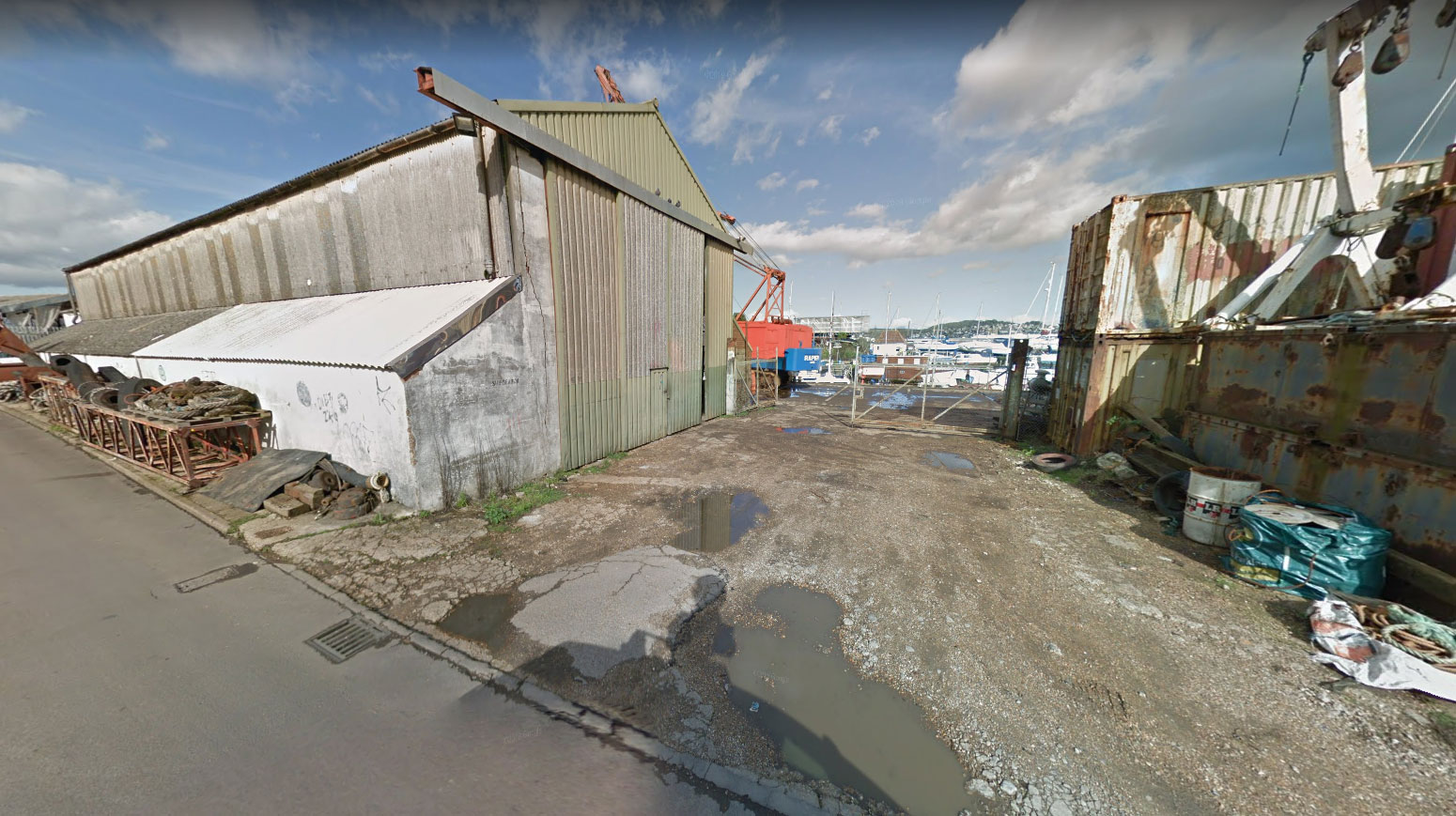
This will not always be easy. This is a yard I knew well in Newhaven that built fishing boats under 20m - it is still there (at least on Google maps) but many more are not, replaced by ubiquitous jerry-built waterside apartments with galvanised balconettes and through-colour renders.
The Prime Minister helped scotch fears that his team was about to trade away British waters for the commercial gents in the City. It seems the commercial gents are supremely relaxed about EU threats anyway - and only Globalist mouthpieces such as the CBI are raising this as an issue. As Roger Bootle writes in the Telegraph
The fishing industry will, I think, be the litmus test. Apparently, Brussels is going to try to secure continued full access to British waters by trading this off against access to EU markets for the UK's financial services industry. The fishing industry may be pretty insignificant economically - and especially in comparison to financial services - yet it has enormous political importance.
It was sold out by Edward Heath, the then prime minister at the last moment during the negotiations that took Britain into the EU in 1973. And fishing is of particular significance in Scotland. The SNP wants to keep Scotland in the EU. If we sell out the fishing industry again this will be seen as a massive betrayal, especially in Scotland.
As for the financial services industry, that is a different kettle of fish - as it were. The EU needs the City of London as much, if not more, than the City needs the EU. If the EU makes things difficult for British financial services firms then it will be cutting off its nose to spite its face. Meanwhile, the City will thrive, as it always has done, selling services, including new ones based on fintech, around the world.Guido carries a full video of the speech. Sit back, clutch drink of choice and enjoy!
Prime Minister - Greenwich - 3rd February 2020
Sunday, 2 February 2020
Post-Brexit - actions have consequences
It almost went unmissed. Following the election result more than one of the haute-remainers popped up in the media shrugging their shoulders and saying "Well, we'll have to accept Brexit now". These were not minor fools and trolls, the silly chatterers, luvvies and C-listers who filled the press with their whining for more than three years but the most senior actors in our State, formerly Privy Council members, former Ministers of the Crown. That's the first demarcation we must make - between those who, however hard they had campaigned for 'Remain', said "Well, we'll have to accept Brexit now" on 24th June 2016 and those who only said it after 13th December 2019. Only the former are truly reliable; the latter are risks to our democratic health, who have demonstrated scant regard for democracy and cannot wholly be trusted ever again.
Words and actions have consequences. Oh, no one gives a fig for the lunken-headed luvvies who have made such idiots of themselves or for the millions of the masses so energised by the democracy-deniers. But for those with whom we entrust our democratic power, or those who exercise economic power over our lives, their actions since June 2016 must inevitably colour their post-Brexit futures.
I think for instance that the CBI is now finished as a credible voice for British business. For over three years the organisation was an enthusiastic participant in Project Fear, using the resources of its wealthiest Globalist members to sabotage, undermine, devalue and oppose the Referendum result. If the CBI thinks it can now just shrug, grin sheepishly and resume its pre-2016 role, it is deeply deluded. There are already calls for a replacement organisation to represent British business. (the 'Financial Services Industry', despite the most wishful thinking of the CBI, is not in fact an industry)
Labour are about to offer the country a Leader and a shadow cabinet whom, it now seems certain, will all to some extent have refused to accept the Referendum result from 2016. They intend to ask the country to entrust them with our democratic power in 2024. But can we ever, ever again trust those so ready to disregard the clear instruction of the ballot box? How can they ever be trusted?
In contrast, those on whom we should bestow especial trust and regard are those who fought hard for Remain during the Referendum contest and who subsequently opposed efforts to frustrate the outcome. They are true democrats. They indeed are the Righteous Within the Nation and they can be safely trusted with our votes and the power we lend them.
We must go forward as One Nation, but words and actions have consequences. The most fervent amongst the democracy-deniers can not now be surprised that they are no longer trusted.
Friday, 31 January 2020
Dear Ursula ..
Dear Ursula
Many thanks for the kind words from the floor of your assembly. The United Kingdom will also always love the nations of Europe - and those nations will remain our favourite holiday and retirement destinations. Many of them even use the same notes and coins, which makes it easier!
However, I should point out that we're not actually leaving Europe. Of which we're of course an integral part. And we'll be marketing our many fine comestibles products across the world as 'Food from Europe' as well as 'Made in the UK'. And we remain proud of our continent of 730m people, of whom some 460m are also 'citizens' of your Federation thing.
We'll have a year more to enjoy the madcap, mouth-frothing, carpet-chewing antics of your rantiest stars - Hof's histrionics, petulant posturing and insane rhetoric keep us all in good spirits and we enjoy immensely his little You Tube clips. After that, I'm not sure who we will have to laugh at - unless Labour have elected a new Leader by then, of course.
Anyhow, must close. Good luck with those criminal investigations against you - after all, anyone can accidentally wipe two mobile phones containing incriminating criminal evidence on the same day. If you're not in jail, we'll correspond again in eleven months.
Best -
Britain.
 |
| Bob from today's Telegraph |
Thursday, 30 January 2020
The day Jo Swinson voted for Brexit
On 29th October 2019, the LibDems and the SNP, bloated with hubris and swollen with bluster, led a recalcitrant Labour into voting for a General Election, and Brexit became certain. It was, needless to say, deeply opposed by the haute-remainers - the Blairs, Grieves and Adonises, who were keenly aware that postponing things as long as possible, gaining a year-long extension from Brussels, would give them the best chance of a second referendum and of reversing Brexit. The inflated egos of second-rate politicians won, to the benefit of the nation and the gratitude of the 17.4m who voted to Leave.
On the morning of that momentous vote it was still absolutely unclear which way it would go. I was prepared for months, even a year, of continued uncertainty and the prospect of Brexit becoming ever more distant. Thank you, Jo Swinson, for being such a monstrously vain, conceited and deeply stupid Parliamentarian. We owe Brexit to you.
On the morning of that momentous vote it was still absolutely unclear which way it would go. I was prepared for months, even a year, of continued uncertainty and the prospect of Brexit becoming ever more distant. Thank you, Jo Swinson, for being such a monstrously vain, conceited and deeply stupid Parliamentarian. We owe Brexit to you.
Nemesis of the haute-remainers - John Gray
Today is yet another crunch day for Brexit. So many crunch days for Brexit have come and gone that I am not getting excited; either the Commons agrees an election and the EU deigns to allow an extension, or something else happens.
It's always good to take the chance to step back and look at the bigger picture. The Telegraph is absolutely right today in drawing attention to an essay in New Statesman America by John Gray. As the unfortunately-acronymed NS is core leftie-thinking fodder, it will be uncomfortable reading for many of those Gray terms 'haute-remainers' - the Blairs, Adonises, Grieves and others. I commend it to you.
I have said all along that Brexit was not primarily about the EU but about a wider democratic correction in the UK that re-balances power away from an establishment elite and back to the voters. This year the BBC, in a rare act of political prescience, featured Reith lectures by Lord Sumption covering the effects of State capture by this political elite on the relationship between law and democracy. Gray's focus is the way in which the Conservative Party has reacted and changed, as it has throughout its history, to ensure it comes through intact. The same cannot be said of parties embracing the haute-remainer cause.
Gray's essay is too crammed with succinct and tight analysis to usefully select any single paragraph to quote summation, so here then, as a sample of the essay rather than a precis, is just one -The haute-Remainer mind is an example of what the 20th century’s subtlest and most original conservative philosopher called political rationalism. Michael Oakeshott (1901-90) used the term to describe totalitarian ideologies such as Leninism and National Socialism, but he was clear that any kind of political tradition could succumb to rationalist ideology – including conservatism. (His own version of conservatism – an ultra-liberal variety, in which the ideal role of the state was that of an umpire – itself did.) The core of rationalism in politics is an idea of politics itself. Rather than being a practice in which people negotiate the terms on which they co-exist with one another, politics means the imposition of an idea. The idea is self-evidently true; anyone who questions it is ignorant and stupid, or else wilfully malignant. Though they claim to embody reason in politics, haute-Remainers cling to a view of the EU in which facts are secondary or irrelevant. They fulminate on the dangers of Brexit without ever mentioning that Paris has been convulsed by riots while Barcelona has become the scene of mass demonstration, burning streets and police violence. No mere fact can be allowed to cloud the vision of a sacred institution.Let's see what the day brings.
Wednesday, 29 January 2020
2019 EP elections - SMASHED
The country finally told Theresa May what they thought of her in the European Elections of last year. The vehicle was provided by Nigel Farage, and Conservatives lent him their votes in millions. Even Conservative Home advised Conservative members, who cannot openly vote for another party without risking expulsion, to 'refrain from voting Conservative' nudge-nudge. Theresa May could already see which way it was going, and called it a day. Nigel won by ridding us of May even before the first vote had been cast.
The Brexit Party's party on Friday in Parliament Square is a fitting tribute to itself. It was there to be used when electors needed most to use it, as UKIP had been in the past. The result drove deranged Remainers into frenzies of idiocy; AliGob foamed, PTSD Adonis chewed carpets and 'Howler' Grayling went into Twitter meltdown.
The Brexit Party's party on Friday in Parliament Square is a fitting tribute to itself. It was there to be used when electors needed most to use it, as UKIP had been in the past. The result drove deranged Remainers into frenzies of idiocy; AliGob foamed, PTSD Adonis chewed carpets and 'Howler' Grayling went into Twitter meltdown.
SMASHED
27th May 2019
Well, you can read the news as well as I can. Just 3 MEPs for the Conservatives, but including Dan Hannan. I must say 9% of the vote was better than I was expecting - if May hadn't announced her resignation, I'm convinced we would have got no more than 6% and no seats. More good news in PTSD Adonis having been disappointed, but that's thin cheer.
For most people of course TBP's success is the single story. Nothing can detract from 28 seats - possibly 29 when the last two areas declare. If the party had been around a month or two longer I suspect they would have taken even more votes from both Labour and the Conservatives.
And of course the LibDems, the Remain party, with some 2/3rds of the Brexit Party votes, will also now move to consolidate their status as the Brexit opposition party with an eye to the next GE, with the advantage of an established party structure and existing parliamentary incumbency. They can sell themselves as "We're not Corbyn" and also take more voters from Labour and Conservative parties. The CUKs are nothing - forget their grandiose delusions of a 'pact' with the LibDems. Cable can tell them to join-up or FO.
All over Europe the victor has been .... democracy. Turnout up, apple carts overturned, politicians in tears, some dreams shattered, others come to fruition. Nothing earth shattering, but a clear message. The Conservative Party, like Labour, may have no future, the corpses of both parties picked over by the Teal and Orange insurgents, but for now will remain in government . Our MPs will be shitting themselves and will avoid a GE like a vampire eschews garlic.
Have a good day all - Today is a good day.
Predicted % Actual %
Brexit 34 32
LibDem 17 20
Lab 15 14
Green 11 12
Con 9 9
CUK 4 3
UKIP 3 3
Tuesday, 28 January 2020
The death of EU-NATO
The election on 8th June 2017 was an utter, unmitigated disaster - May's hubris and rank stupidity had thrown away whatever Brexit majority we had in the House. May of course threw Nick Timothy and Fiona Hill overboard without hesitation; blaming everyone else has forever been her way, but in this case it had some justification. Hill has become decently obscure, but for some reason the 'graph has given Timothy a column, the mere sight of which still raises my blood pressure. I have never read it - and I stopped reading anything by Matthew Parris about three years ago. Life is too short to waste even a few seconds reading anything by men whose judgement is so piss-poor and whose opinions are so deviant as to make the pair of them ink-thieves.
I won't repeat my post of 9th June. It was craven. A few days previously, however, was one of those occasional posts that unaccountably scores big hits; this got almost 3,000 views. It holds good over time and is as true today as it was in 2017.
I won't repeat my post of 9th June. It was craven. A few days previously, however, was one of those occasional posts that unaccountably scores big hits; this got almost 3,000 views. It holds good over time and is as true today as it was in 2017.
Germany will never, ever pay more than now for NATO
Many of us will have grown up with the BAOR - either as serving soldiers or like myself as army brats. There was a time when Gütersloh, Fallingbostel or Sennelager were more familiar to us than Slough, Reading or Peterborough. The BBC even had a forces radio programme, and knowing at least half a dozen BFPO numbers was par for the course. Well, BAOR disappeared without notice in 1994. The 25,000 remaining troops in Germany became BFG, now down to about 4,000 and scheduled to pull out completely by 2020, almost exactly in line with Brexit.
The change came with the fall of the wall in 1989. Before then, our lads were to play a vital role in forming a heroic but utterly pointless sacrifice in holding up the Soviet advance through Germany to France for about 72 hours. Then we all thought it an essential sacrifice. Now we wonder, why bother? Perhaps France and Germany would be better off under Russian rule. Why shed British blood in their defence?
When Trump abstained from the traditional annual G7 offering of American blood in Germany's defence last week he too must have felt the same. Germany has been financially raping Europe for thirty years, sitting on a vast pile of gold as she threatens, bullies and manoeuvres others to pay for everything, like some nightmare dining partner endlessly disputing the division of the restaurant bill.
Turkey is now a Salafist terrorist nation and belongs nowhere near NATO. In bullying the Netherlands into ignoring the veto of the Dutch people and extending full EU privileges to Ukraine, the EU has just given Putin another poke with a sharp stick. The UK will find it hard to mobilise even 6,500 troops - we need a standing army of 100,000 to put an adequate force in the field. Germany's armed forces are to all purposes entirely useless. Amidst the ruins of NATO (and oh yes it's now finished in all but name*) there's only France to defend the EU.
Merkel may gamble that she'll get away with it, and perhaps she will. But without British and American wealth and blood to pay for it. We're done.
*Also proving the rule that corporations are most likely to fail at the point at which they open a spanking glossy new multi billion dollar HQ
Monday, 27 January 2020
Theresa May - who?
Theresa May became PM on 13th July 2016, after the stunned Cameron had quit. History will not remember Cameron kindly; the kitchen suppers, bland mediocrity and above all the multiple Cornish holidays will condemn his reputation. Above all those pap shots of Cameron in his Boden beachwear, his chubby formless torso and little mantits exposed to the sun made him look foolish and frivolous. I didn't remark at all on May's appointment - which given the fury of my later invective is a telling gap. Instead I commented on a 'threat' by third-rate Euro academics to go home -

13th July 2016
I was 40 when I took my second degree, and by then the rot had already set into the English universities. Only one member of the research and teaching staff had an adequate command of English and he was an American. The VC and senior admin staff were concerned solely with cramming their own mouths with as much public gold as they could hold, and in pursuing every crooked, academically dishonest scam and scheme to this end. The staff - at best academically mediocre - were under enormous pressure to publish. Anything. The consequences were academic journals full of unreadable rubbish; prolix, poorly written, loaded with jargon and cliches. Worthless dross in the main that did not advance scholarship one iota. The point, of course, was the publishing credit - for both the academic and the institution.
And so our universities became magnets for third-rate European academics who were rightly unable to find employment in their own countries. The only qualification it seemed was their ability to churn out 20,000 words of meaningless drivel like clockwork every quarter.
This spew of garbage encouraged a new wave of academic publishing - The Journal of Otiose Sinology, 4 issues a year, subscription $1,400 - journals bought only with tax-money by university libraries and that exist solely to put into print the worthless drivel from these fourth-rate minds.
The cap of course is that these dreary failures call themselves 'intellectuals' in spite of the fact that we don't have intellectuals in England. We have scholars. Intellectuals are for nations such as Hungary, or cities such as Paris, where they tolerate young men with no change of underpants, little money and with poor social skills.
And now, offended by Brexit, some want to leave, to go back to Europe. That's fine. As 'intellectuals' they will appreciate that their departure will marginally increase the average level of scholarship in both England and Europe. It's a win-win.

Sunday, 26 January 2020
Look back sans rancour (1)
In the absence of 'events' this week, until Friday I'll be offering selected snippets from the past three and a half years. Starting today with the referendum itself. This first, on the eve of the referendum, featured the late great Roger Scruton. The BBC podcast is still there, and he still says what I wrote he said. Like Lord Sumption, Roger had a greater faith in representative democracy and a greater fear of the alternative than we, who make up the alternative, of course hold. Both thought the referendum was a bad idea, and of course it will take half a century to prove them wrong. Or right. But both subjugated themselves willingly to the outcome.
22nd June 2016The second was the morning of the result. It was a glorious June alpine day, and even at 6am the sun was blazing and I had the big wooden double windows at the front of the house thrown open. I wrote this as I watched the valley below start its day, unaware of the earthquake, and with the scent of new cut hay from the meadows perfuming my coffee and the joyous sound of birdsong as a backing chorus mocking the shellshocked BBC broadcasters.
On this penultimate day I'd like to offer a few reflections and pose a few questions, largely those arising from two events - last night's TV debate, and an unnoticed 10 minute broadcast by Roger Scruton.
I've long admired the work of Roger Scruton, particularly that which I perceived as acting against Totalitarianism and towards the growth of an effective and empowered citizenry. Roger has also long had a view that the purpose of our democratic structures is to homogenise and deradicalise populism; if legislation were enacted immediately on the back of public sentiment, we would have had capital punishment after the murder of Lee Rigby. Roger holds the abilities of MPs and of Parliament in high regard. What I think he's missed is that we no longer trust our MPs, for instance, not themselves to use say the murder of Jo Cox to introduce repressive and Totalitarian measures. MPs are sadly not so well informed or so altruistically disposed as Roger would have them - and we ordinary people not so radical nor so ill-informed that MPs are required to act on our behalf.
So Roger's 10 minute Sunday broadcast ( http://www.bbc.co.uk/programmes/b07flhwb ) against petitions is a diatribe (if one can call such gentle disapprobation) against direct democracy and in favour of representative democracy. People are not capable of making wise choices when given simple binary choices; things are more nuanced, more complex and only our informed and deliberative Parliamentary system is capable of dealing with such matters, including the Referendum, says Roger.
He's wrong, of course. And it pains me to say so. He once valued Burke, and I would direct him back to Burke's little platoons; the smaller the realm of decisions to be taken, the higher the quality of those decisions. The more local the associations, authorities and interests with which we interact, the better the knowledge and the choices. MPs are now a part of a global cabal, a political class that views the world internationally, alongside global corporatism and global finance. They are not therefore well placed to make decisions in the interests of our shires, our towns and metropolii.
And that was demonstrated last night in the BBC debate with a participative audience of 6,000 ordinary people to whom Roger would deny the vote. They were no less well-informed than the experts on the podia, and far better represented the interests of the British people.
Leave or Remain, whatever comes out of tomorrow, I'd always, always trust my future to the votes of all enfranchised Britons whatever their station in life than to a political class no longer wholly trusted or wanted by those voters.
24th June 2016
I'll be posting later when my wits and thoughts are collected - at the moment I'm still reeling. I stayed up for the Newcastle / Sunderland results - and when it became clear the picture had changed, snatched a doze and stayed with it. Now I can only say the feeling of lightness as an ugly and enervating succubus has been taken from our backs is wonderful, but with it now comes a duty of responsibility. We must re-weld our people - all our people - back into one nation. We must do it without hate or rancour, and those brave enough to vote Leave are well placed to show their privileged 'Remain' brethren who have either suckled at the dugs of the beast or been its dags how it's done.
I remember the memorial service of Ralph Harris, Lord Harris, at the church in Smith Square just over the way from the EU Kommandantur. God, he would have loved this day. He wrote:
Liberty carries with it individual responsibilities. Responsibility for yourself, and hopefully your family and as far as possible your neighbours. But it does throw responsibility onto our own shoulders. Well, that's what living means; it doesn't mean shrugging off responsibility and taking soft options.
I have confidence in my land and my people and that things have not quite yet gone so far that we cannot rescue the greater part. God bless you all.
Subscribe to:
Posts (Atom)